
Guide · Choose
Saf, seccade or medallion? Choosing the right mosque carpet design
Five design families at a glance: which patterns and colours suit your prayer hall, with a decision table.

There are five common design families for mosque carpets: saf (row pattern), seccade (individual prayer place pattern), medallion (göbek), geometric patterns and plain carpets with subtle row lines. Which one suits you is decided mainly by five things: the shape of the room, any columns, a dome, the size of the community and the effect you want the room to have.
This guide explains each family with its strengths and limits, gives you a decision table and shows what to look out for with row spacing, the qibla and colours. You will also find a first impression in designs at a glance.
The five design families at a glance
Saf: the row pattern
Saf means ‘row’. The pattern consists of continuous, straight lines that mark the prayer rows. There are no fixed individual places: whoever comes to Friday prayer stands in the row and moves closer together as it fills.
This is practical because the use of the space stays flexible. On Eid, when many more people come, the row adapts. If you search for ‘prayer carpet by the metre’, you will mostly find continuous rolls with a row pattern. Ask which pattern and which roll width are available for your room. With a made-to-measure carpet, the width is matched to your room.
Seccade: the individual place
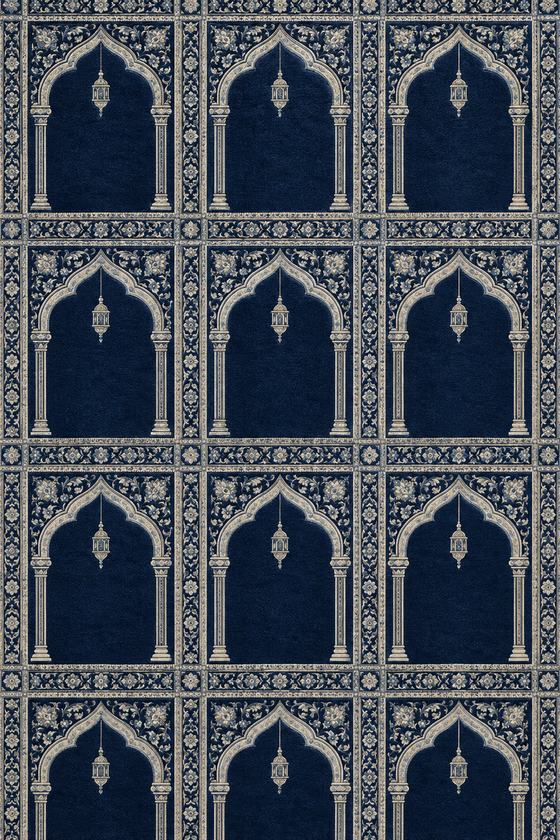
Seccade is the Turkish word for prayer rug. In a seccade design every prayer place is shown separately, usually with a mihrab motif: an arch or niche in the pattern that points towards the qibla. The qibla is the direction of prayer.
Every place is visible, and the number of places is fixed from the start. That keeps the rows easy to read and the places countable. However, the width of each place has to suit the community, and later changes are harder because the pattern dictates the layout.
Medallion (göbek): the central ornament
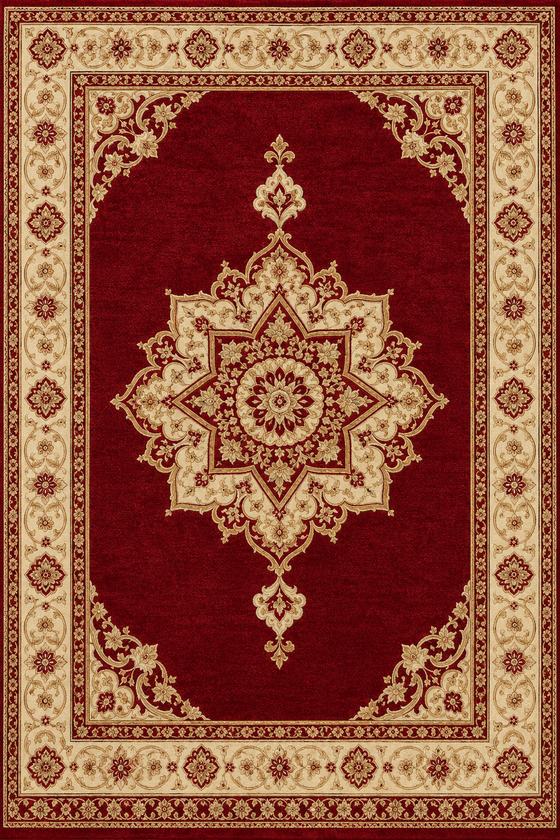
Göbek is Turkish for ‘navel’ and means the central ornament of a carpet. The medallion sits in the middle of the room, often under the dome, and gives the room a focal point. It is often combined with saf lines, so that the centre and the rows work together.
The medallion has to be centred exactly. Even small deviations are noticeable under a dome. So when measuring, record the centre point of the dome, not just the wall dimensions. Columns near the middle have to be planned for from the start.
Geometric: Islamic ornament
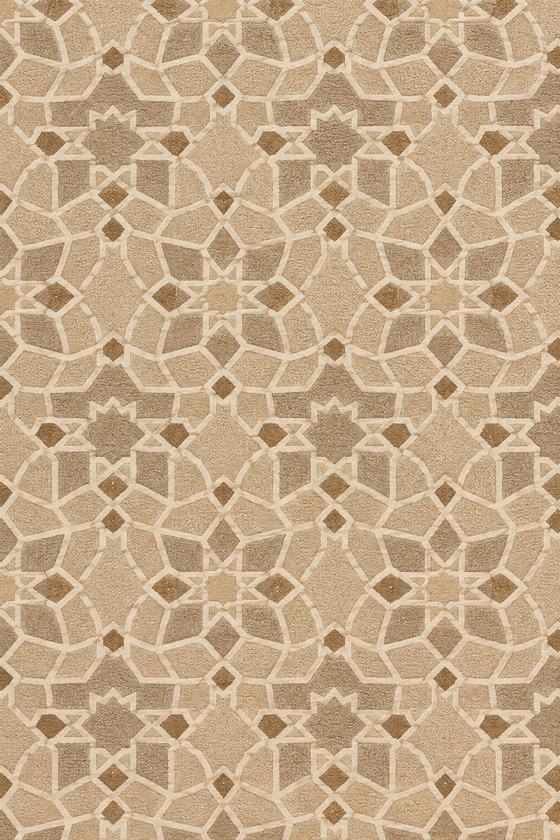
Geometric patterns draw on Islamic ornament: stars, diamonds, polygons and repeating grids. They look calm and modern and often suit new buildings with clean architecture. Individual places are not set out; the pattern fills the surface evenly.
If the carpet is laid from several strips, the pattern has to match cleanly at the seams. Ask about this before you decide.
Plain and understated
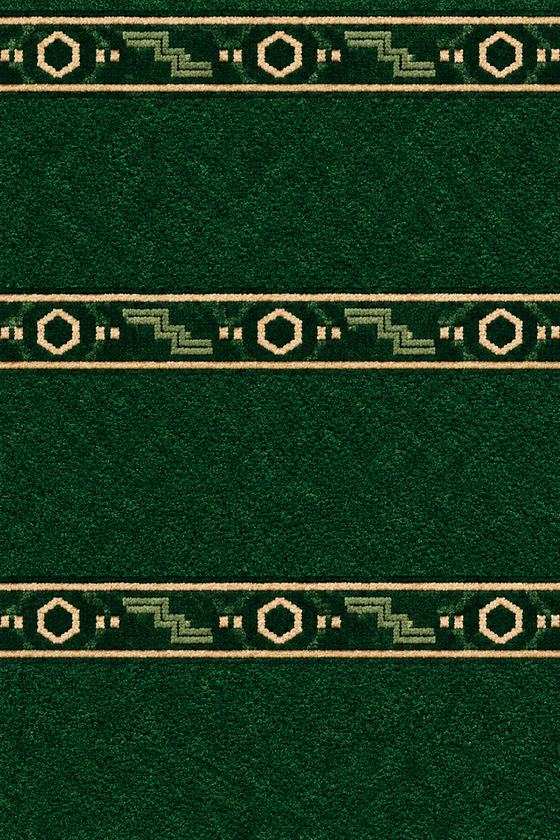
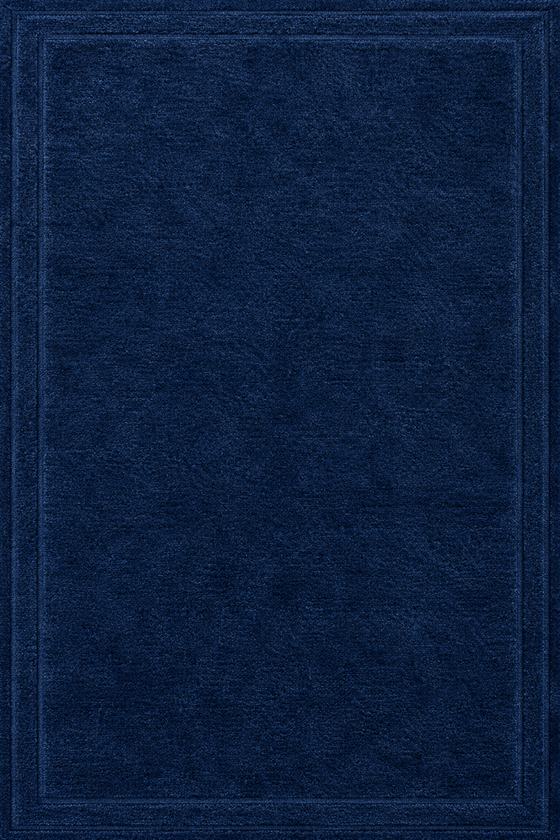
A plain carpet has a calm surface with subtle row lines. It does not distract and suits many kinds of architecture, from a small prayer room to a large hall. Windows, lamps and wall ornament stand out more as a result.
However, a smooth surface shows stains and walkways more quickly than a pattern does. Bear that in mind when choosing the colour.
The following design visualisations show the five pattern directions. They are not photographs of carpets already made:
Decision table: which design suits your situation?
| Situation | Suitable design | Why |
|---|---|---|
| Many columns in the room | Saf or plain with row lines | Continuous lines are more forgiving around columns; a seccade grid would have to be planned around every column. |
| Room with a dome | Medallion, often with saf lines | The ornament emphasises the centre under the dome. |
| Small prayer room | Plain or saf | The surface looks calm and the use of the space stays flexible. |
| Attendance varies greatly (Friday, Eid) | Saf | There are no fixed places; the rows fill as needed. |
| You want to make places visible for sponsorships | Seccade | Every place is recognisable and countable, see carpet sponsorship and fundraising. |
| Calm, modern architecture | Geometric or plain | Clean lines and a calm surface suit clean architecture. |
| Qibla runs at an angle to the edge of the room | Every design needs more planning | Individual places and the medallion have to sit especially precisely. |
If you cannot decide between two designs, our free design advice in German, Turkish and English can help.
Row spacing and width of each place
As a rule of thumb, allow about 1.20 m of row depth and 0.70 m of width per prayer place. An example: a prayer hall is 15 m deep in the direction of prayer and 10 m wide. That gives around 12 rows of 14 places each, so about 168 places.
The calculation applies to free floor space. Columns, the area around the minbar (the pulpit for the Friday sermon) and walkways have to be deducted.
With a seccade design the width of each place is fixed in the pattern. If it is too narrow, the rows feel cramped. If it is wider than necessary, you lose places. So check at a full Friday prayer how much space your community really needs.
Also plan for the women’s area or the gallery. Room dimensions there are often different. Decide beforehand whether the same design should continue throughout.
Qibla and the direction of the pattern
In practice the pattern follows the qibla, not the walls. If the direction of prayer is not parallel to the edge of the room, the rows run at an angle to the walls. Triangles then form at the edges and are cut off. This waste, i.e. the offcuts, can increase the amount of material needed.
In addition, the patterns have to finish cleanly at walls, columns and doors. A diagonal layout is feasible, but needs precise measuring beforehand. How to measure the room and the direction of prayer is explained in How to measure a prayer hall: dimensions and qibla.
Colours, calm in prayer and calligraphy
During prayer the eye often falls on the floor. Calm colours and a pattern that is not too busy therefore help many worshippers to concentrate. Very small-scale patterns, glaring contrasts and strong repetition can distract.
Check these points before choosing a colour:
- Light: daylight and lamps change colours. Look at colour samples in the prayer hall, in the morning and in the evening.
- Wall colour: carpet and walls should look calm together. A carpet in strong colours can look restless next to equally strong wall colours.
- Dirt: very light colours show dirt more quickly, very dark ones show dust and lint. Mid-tones are often a good compromise. The fibre matters too; more on that in the materials comparison of wool, acrylic, polyamide and polypropylene.
On calligraphy: out of respect, mosque-carpet.com does not place Quran verses or names of God on the floor. This is our own practice, not a religious ruling. How your community handles this is for you to decide.


